

Top Trend for Q3 2026: The Best n8n AI Automations Are Becoming Less “Autonomous”
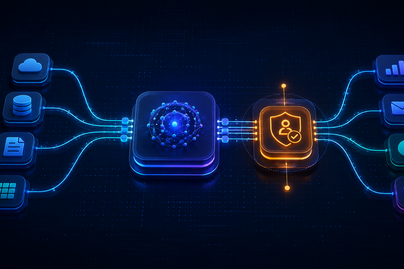
The n8n world is moving quickly from simple “AI agent demos” toward something more useful: AI automations that can take real work off a team’s plate without being given unlimited freedom to make decisions, modify records, or send things on the company’s behalf. The exciting part is not an agent that can do anything. It is an agent that can do the right narrow set of things, reliably, inside a workflow that has clear rules, escalation points, and a record of what happened. For agencies and SMBs, that distinction matters. The businesses getting the most value from n8n will not be the ones trying to fully replace people with a chatbot. They will be the ones using AI selectively inside well-designed automations.
What this means for you
n8n is becoming a practical bridge between traditional workflow automation and AI-powered decision making. A workflow can pull data from a CRM, enrich it, have an AI model classify or summarize it, route it based on rules, and then ask a person for approval before any consequential action occurs.
That is a much better real-world use of AI than simply telling an agent, “Handle this.”
n8n’s recent emphasis on human approval for AI tool calls, auditability, and controlled agent access reflects where the market is heading: automation needs to be productive, but it also needs to be accountable.
Where n8n Automation Actually Stands Today
n8n workflows can currently:
- Connect data and actions across hundreds of tools and APIs.
- Use AI to classify, summarize, extract, draft, and make bounded decisions.
- Route work based on confidence, conditions, business rules, or approvals.
- Pause a workflow for a human to approve, decline, or modify an action.
- Expose selected workflows and tools to AI assistants through MCP.
- Log workflow executions so teams can investigate what happened when something goes wrong.
- This means a company can build useful systems now: support-ticket triage, lead research, internal knowledge assistants, proposal drafting, content review queues, CRM cleanup, reporting, and notifications.
Why “Fully Autonomous” Is Still the Wrong Goal
Despite the rapid progress, there are several reasons to avoid giving an AI agent broad, unsupervised access to business systems.
1. AI Should Not Have Blanket Permissions
An agent that can read every customer record, update every CRM field, send every email, and access every connected tool has far more authority than it needs.
That creates avoidable risk. Better n8n automations give an AI only the specific tools and actions required for one job. A lead-research workflow should not also be able to delete records or issue refunds.
The principle is simple: build the smallest useful amount of autonomy.
2. Deterministic Logic Still Wins for Important Rules
AI is excellent at interpreting messy information. It can understand an inbound email, classify a support issue, summarize a transcript, or turn notes into a first draft.
But it should not be deciding everything.
If a workflow has a clear rule—such as “do not contact an unsubscribed lead,” “do not overwrite an approved field,” or “escalate any invoice above $2,000”—that rule should live in normal workflow logic, not in an AI prompt.
AI handles ambiguity. Rules handle certainty. Good automations use both.
3. Human Review Belongs at the Consequential Moment
Not every AI output needs a person to review it. Having someone approve every classification or summary would remove much of the value of automation. But a human should be involved before an irreversible or high-impact action:
- Sending a sensitive customer email
- Updating important CRM data
- Publishing public content
- Changing financial or account information
- Taking action when the AI is uncertain
This is where n8n’s human-in-the-loop capabilities become useful. The workflow handles all of the preparation, then brings a person in only where judgment genuinely adds value.
4. AI Automation Needs an Operational Owner
A workflow is not “done” just because it ran correctly five times.
Someone needs to own the inputs, approval rules, credentials, failure notifications, changes to connected systems, and periodic review of outcomes. As automations become more connected, this is less about coding and more about operational design.
The real value of a developer or automation partner is increasingly in mapping the business process, setting the guardrails, and making sure the workflow remains dependable as the business changes.
Bottom Line here on the matter
Short term (now–12 months):
AI-assisted n8n workflows become common for internal operations, sales support, customer service, and reporting. The strongest implementations will pair AI steps with normal rules and clear approval points.
Mid term (1–3 years):
More workflows will be initiated conversationally through AI assistants, with MCP making it easier for those assistants to call carefully selected n8n tools. Teams will increasingly manage “what an agent is allowed to do” as deliberately as they manage employee access.
Long term (3–5+ years):
Autonomous systems will handle a larger share of routine multi-step work. But the winning setup will still not be unlimited autonomy. It will be AI agents operating inside well-architected systems where people define the rules, retain authority over important actions, and can see exactly what happened.